
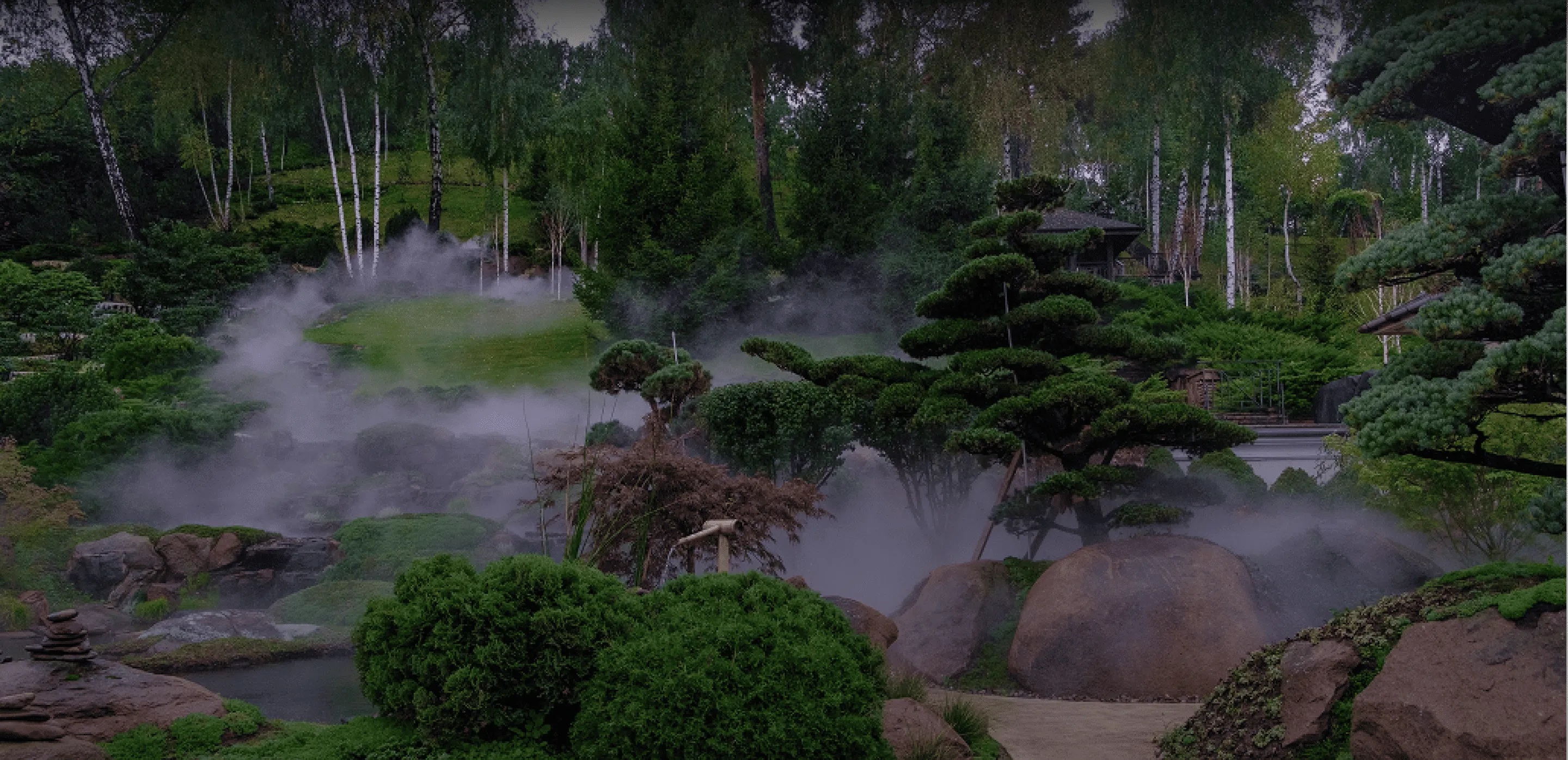
Residential Landscape
Zen Garden
scroll down to explore
project status
completed
We designed this garden as a living landscape scene — a place to observe, walk through, and slowly shift from everyday routines into a calmer, more contemplative state.
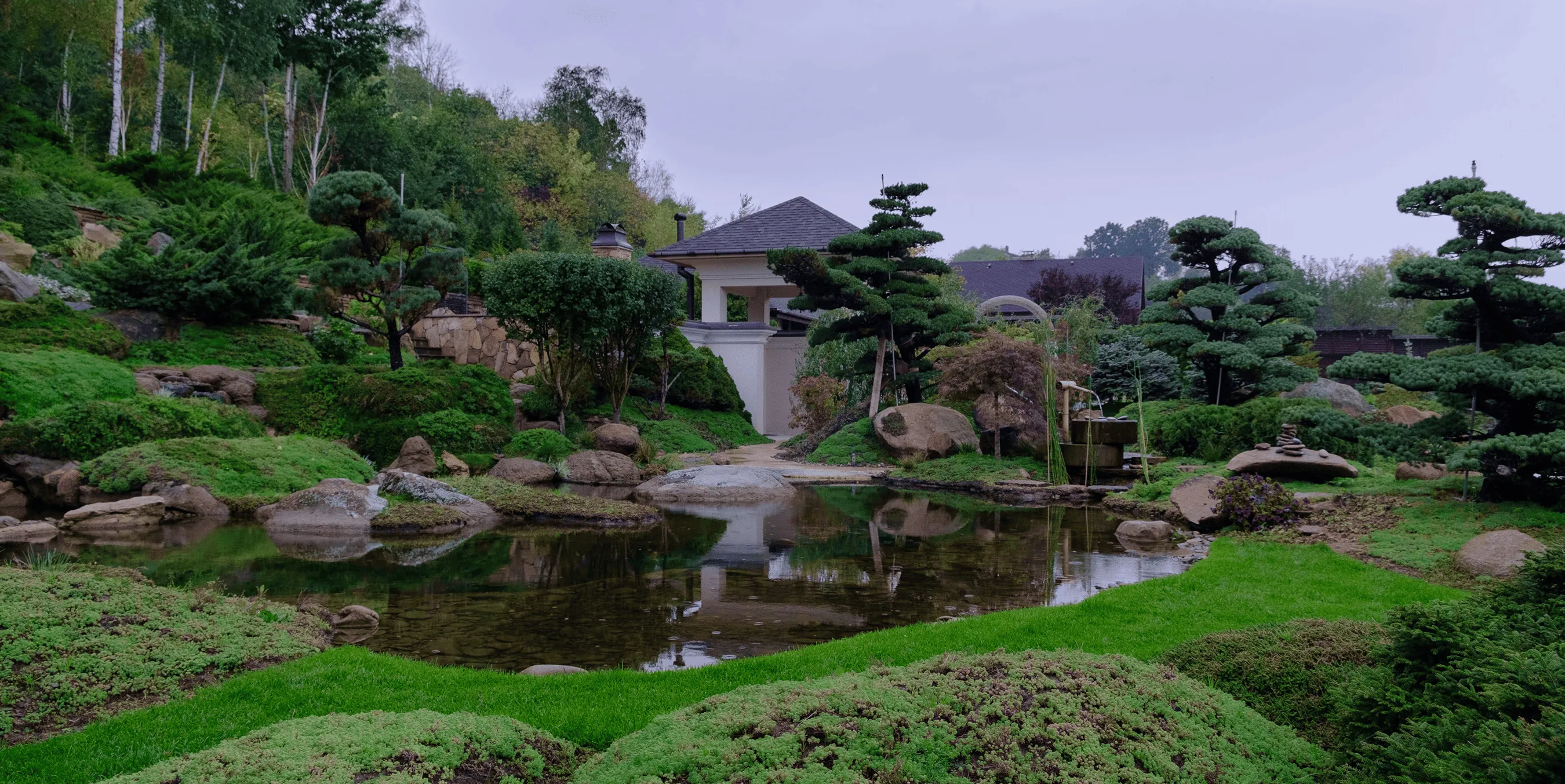
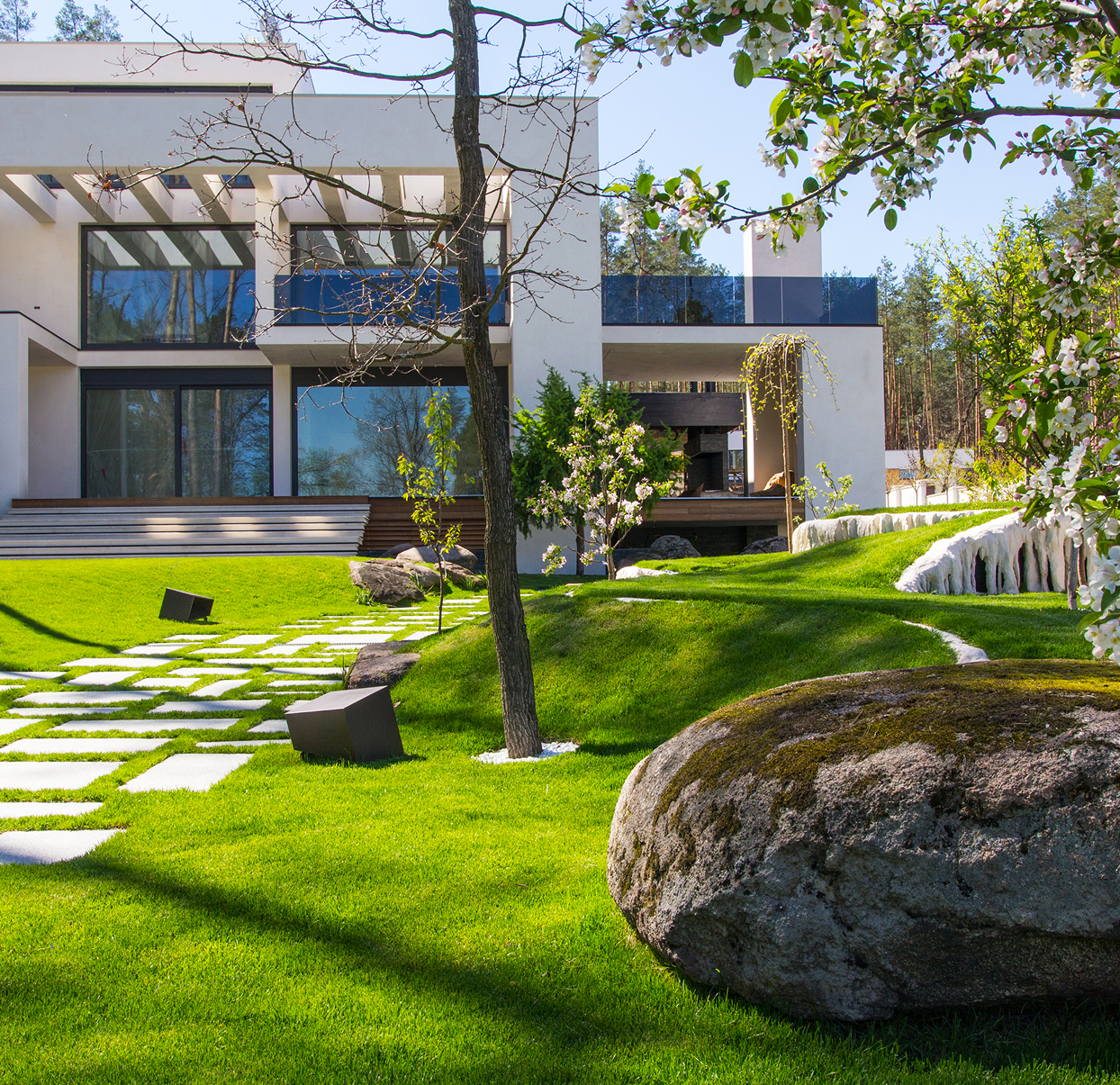
The garden is located next to the house and was created primarily as a visual composition to be enjoyed from the terrace, while also offering a layered walking experience inside the landscape itself.
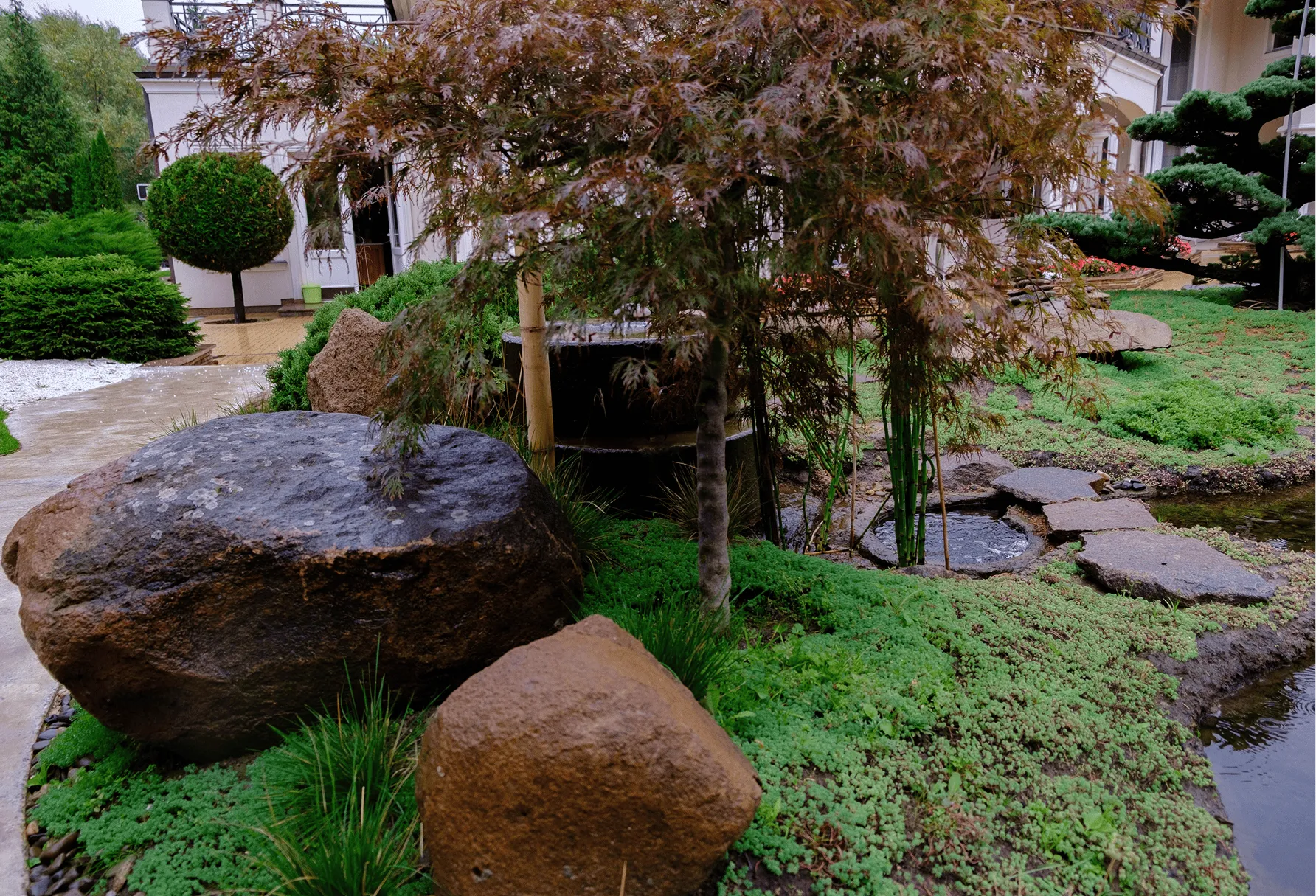
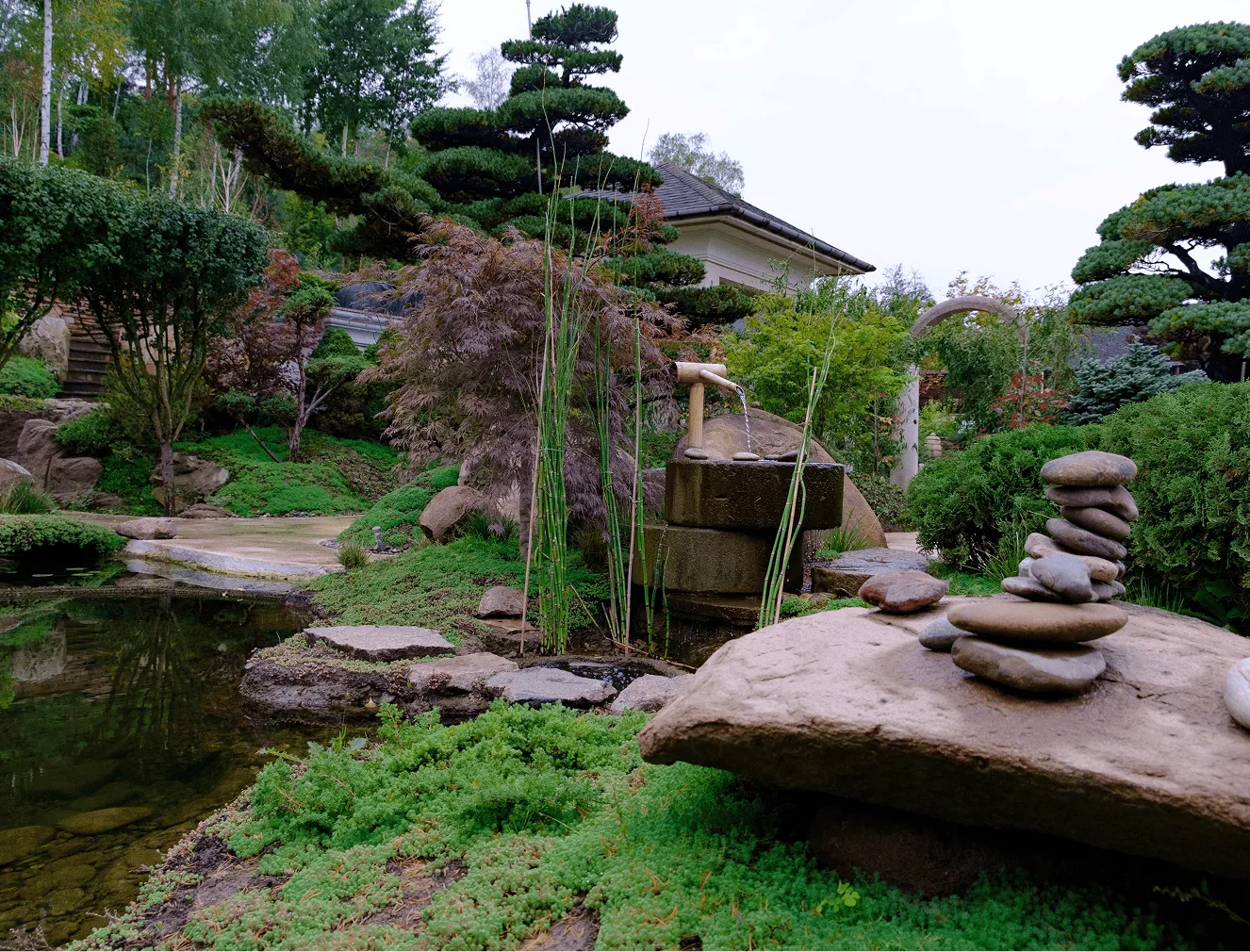
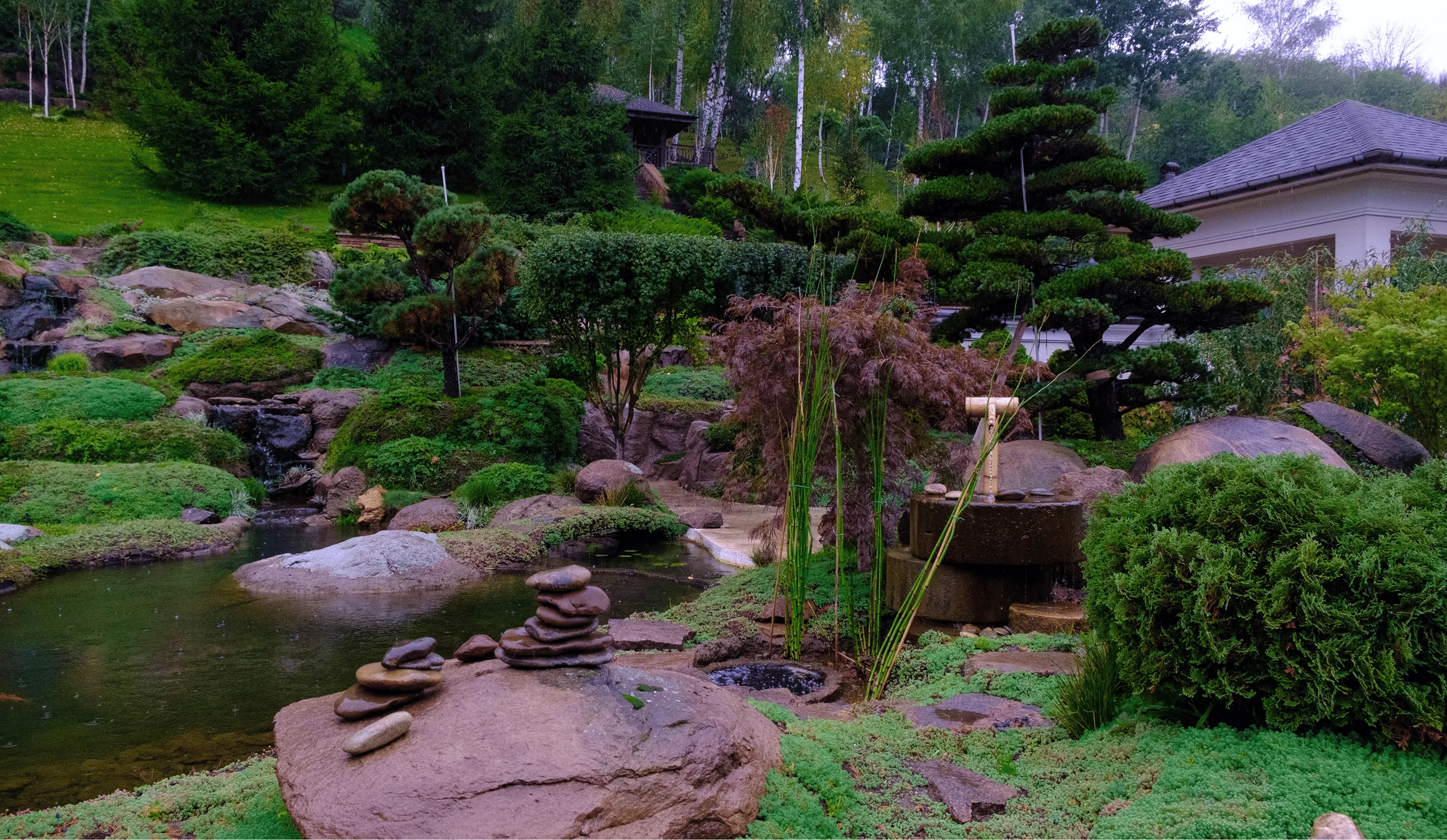
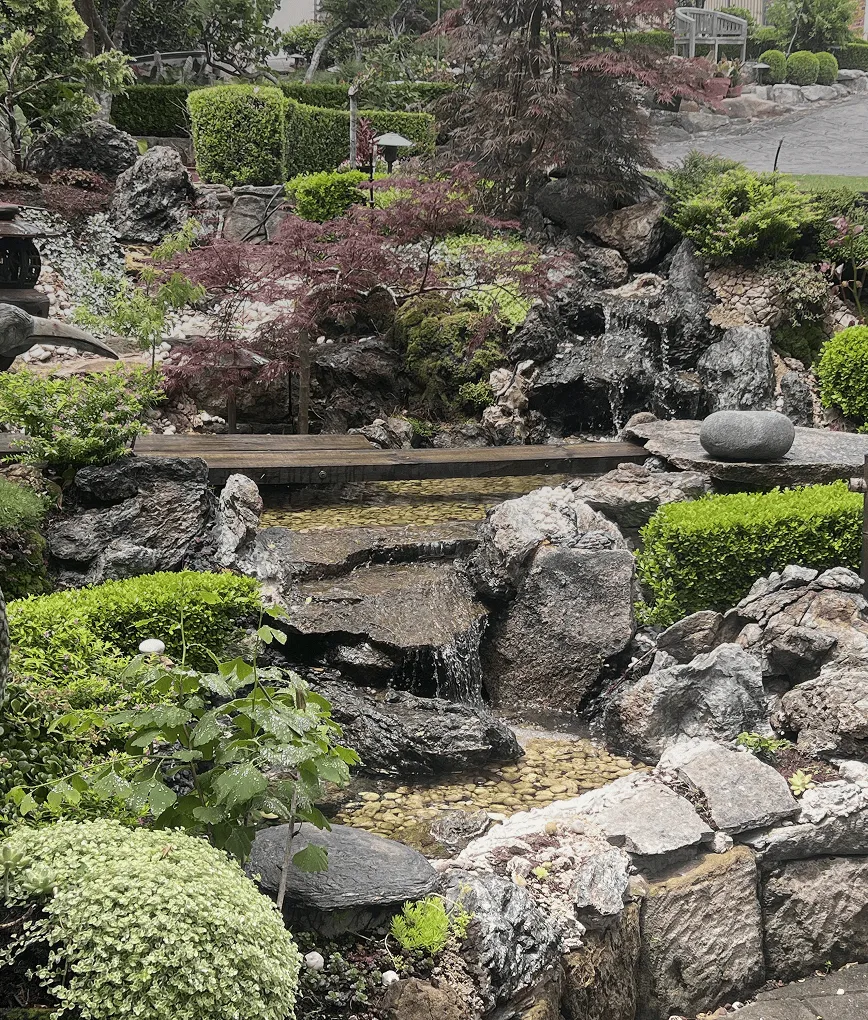
The entrance to the garden is marked by a tsukubai fountain. In Japanese tradition, this element symbolises purification — a moment to leave daily concerns behind before entering a different state of mind. Here, it sets the tone for the entire garden and establishes a quiet transition from the house into nature.
The entrance to the garden is marked by a tsukubai fountain. In Japanese tradition, this element symbolises purification — a moment to leave daily concerns behind before entering a different state of mind. Here, it sets the tone for the entire garden and establishes a quiet transition from the house into nature.
At the heart of the composition lies a central pond, surrounded by sculpted hills that shape the garden’s spatial structure.
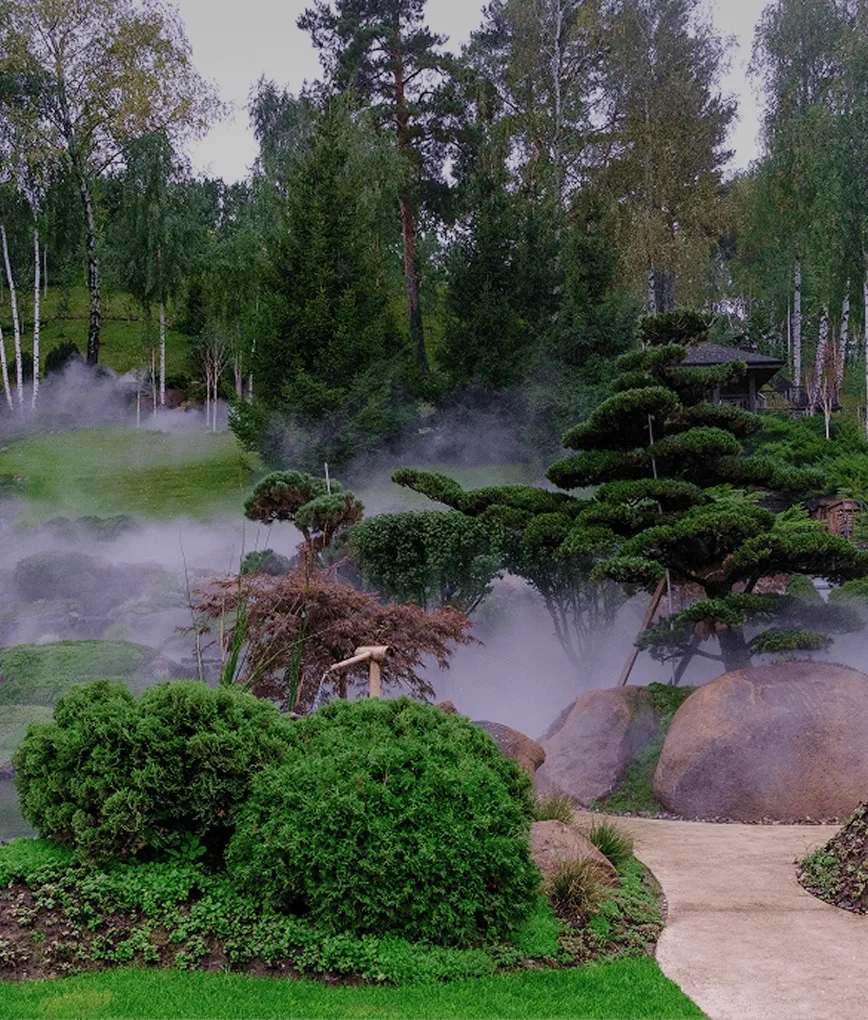
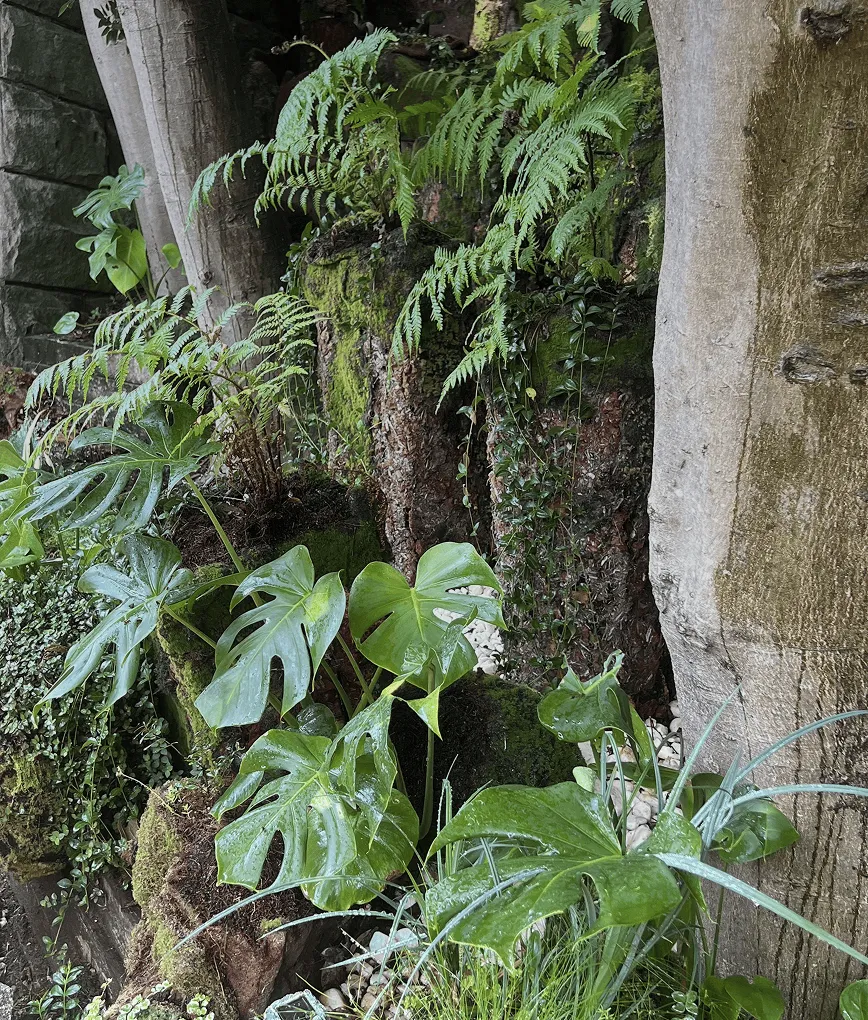
These hills are not decorative objects; they form a three-dimensional relief that defines movement, views, and visual depth. Covered with groundcover planting, they create clean, continuous lines that emphasise the garden’s natural character.
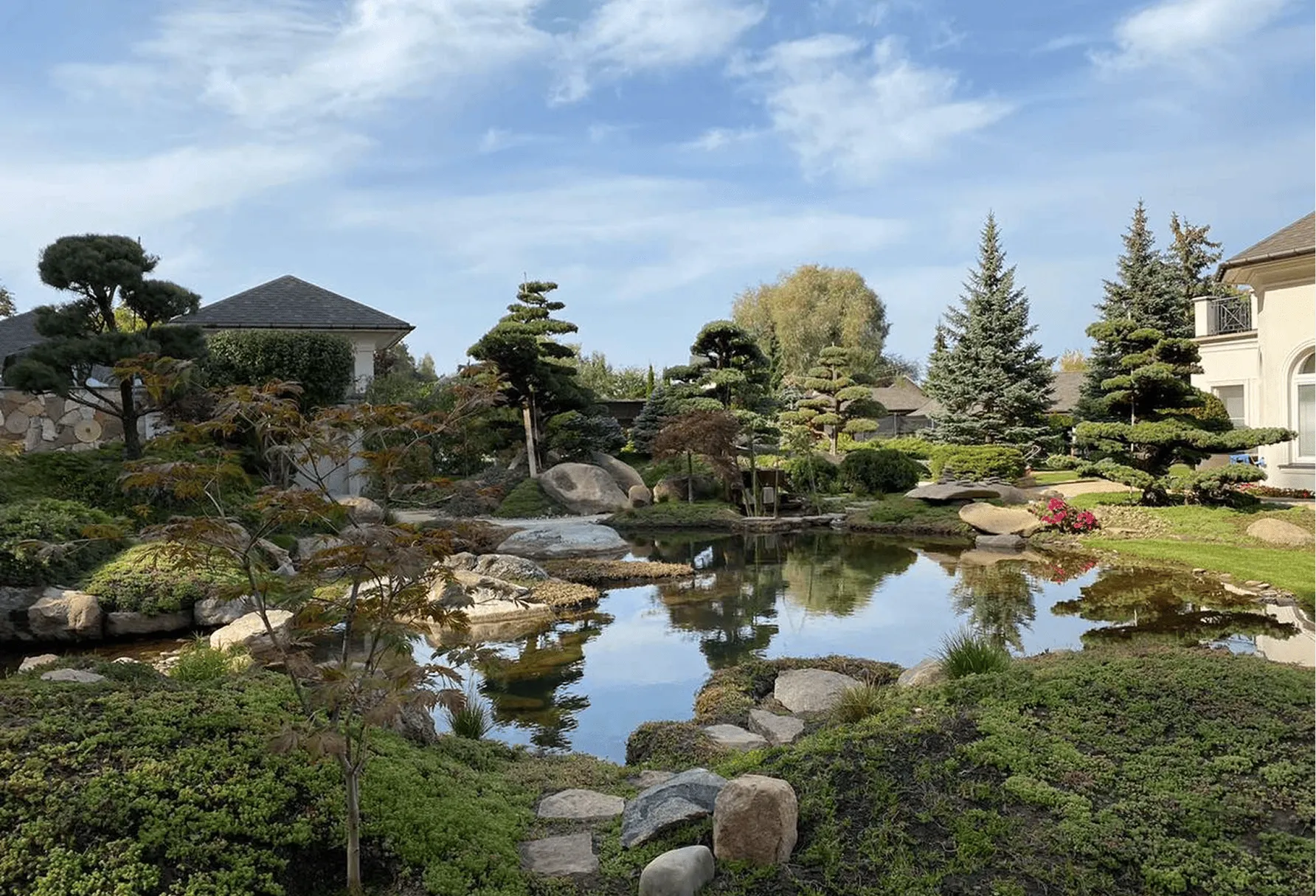
The path network is intentionally narrow and gently constrained by the terrain.
Paths bend and curve as if they are naturally wrapping around the hills, guiding movement through the landscape. From one point, only a single scene is visible — but as soon as you start walking, new compositions gradually unfold. This constant change of perspective is what makes the walk through the garden engaging and immersive.
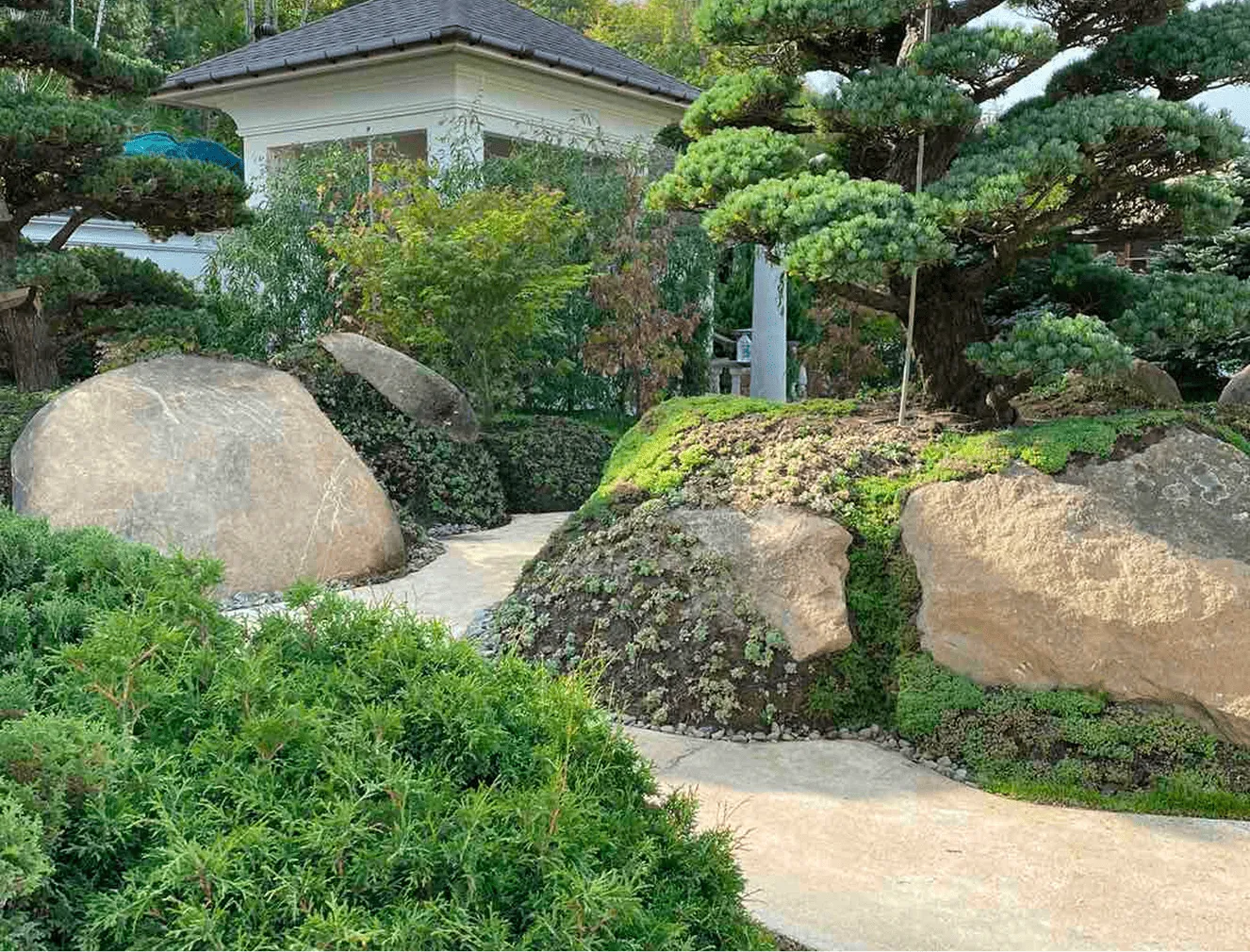
The result is a calm, balanced landscape where form, relief, and planting work together to translate a natural phenomenon into a living, architectural composition.
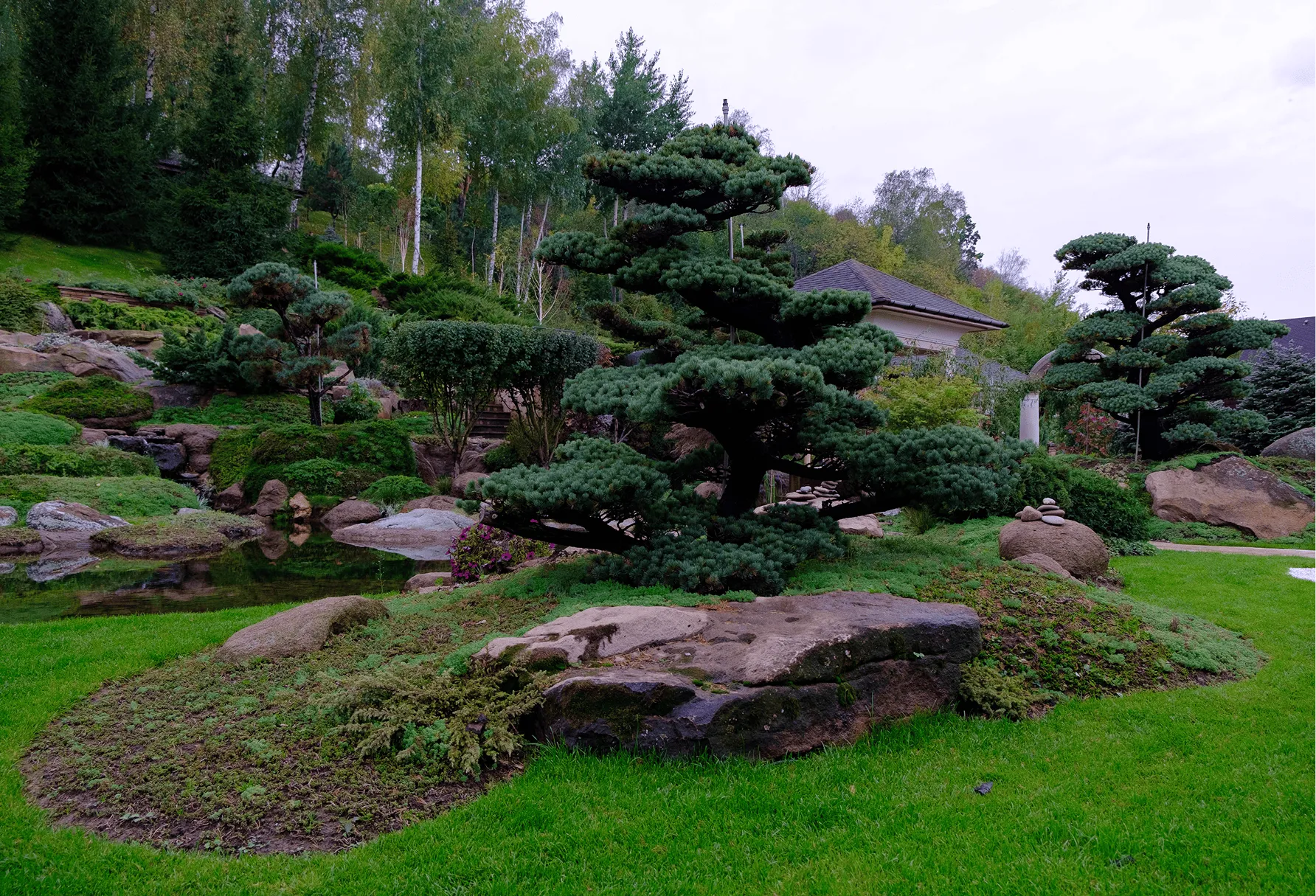
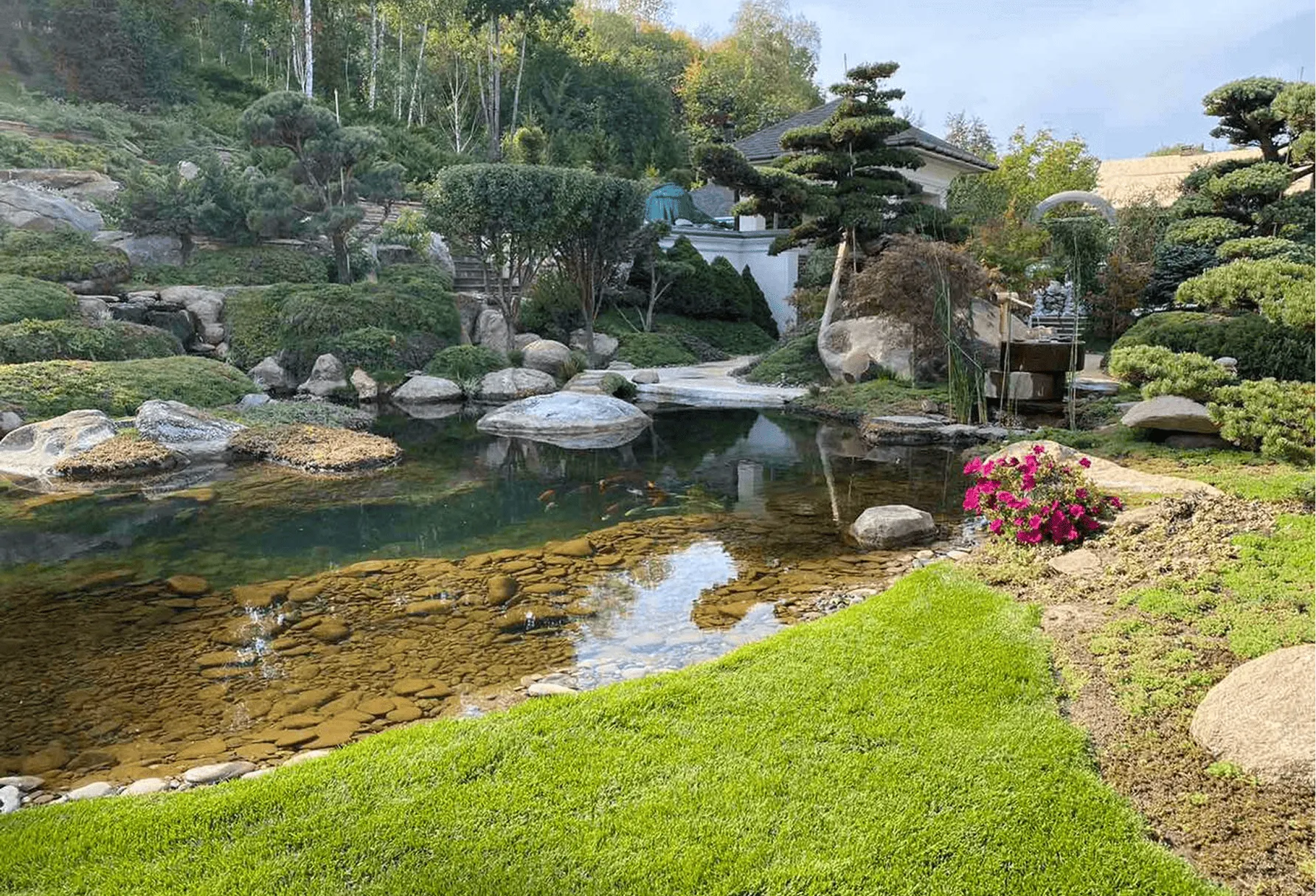
Natural stone plays a key role in shaping volume and scale. Large boulders anchor the composition, while smaller stones support transitions between terrain levels. In several hills, we introduced authentic Japanese niwaki pines, transported from Japan. Their sculptural trunks and refined silhouettes add rhythm and vertical structure to the garden.
Natural stone plays a key role in shaping volume and scale. Large boulders anchor the composition, while smaller stones support transitions between terrain levels. In several hills, we introduced authentic Japanese niwaki pines, transported from Japan. Their sculptural trunks and refined silhouettes add rhythm and vertical structure to the garden.
Water is designed as a multi-layered element rather than a flat surface
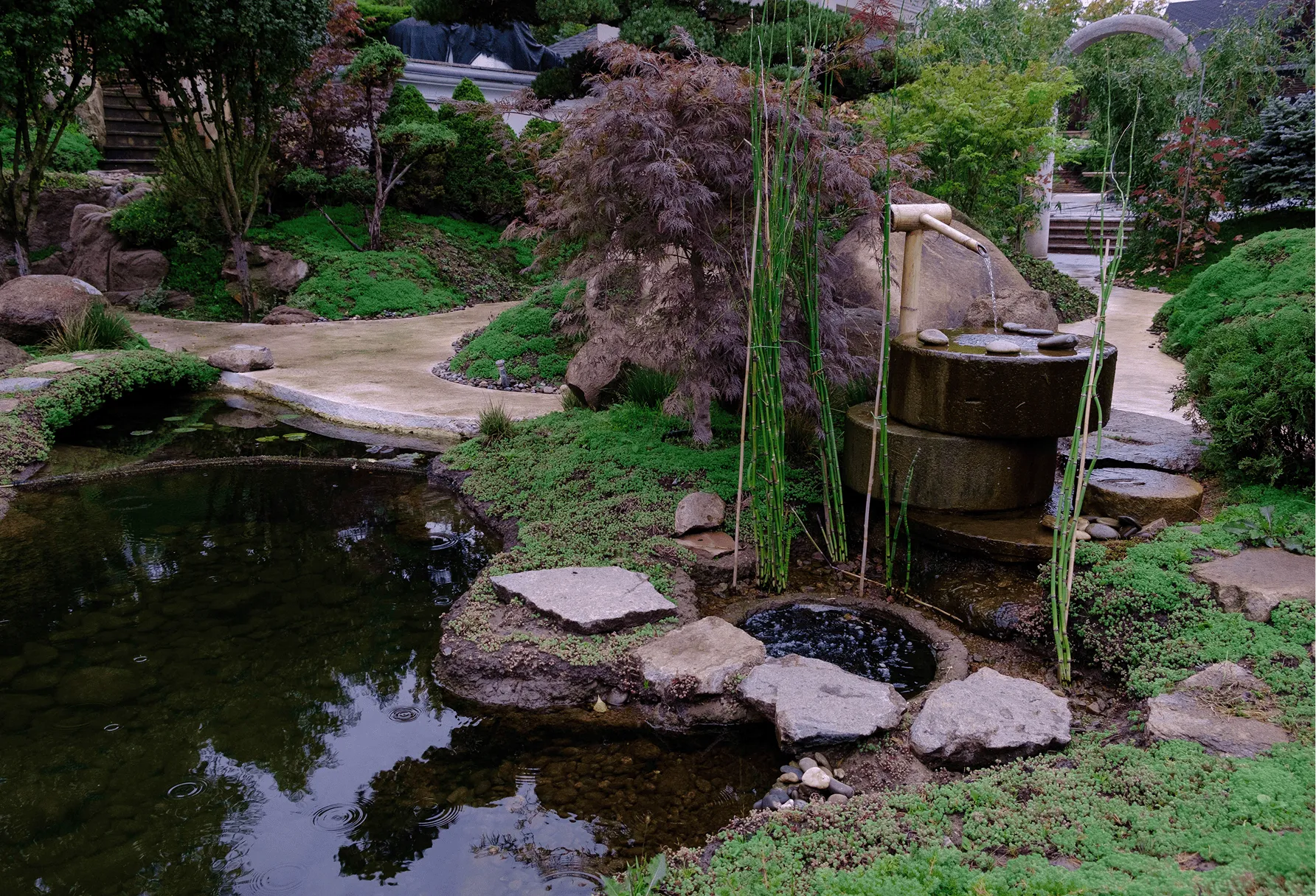
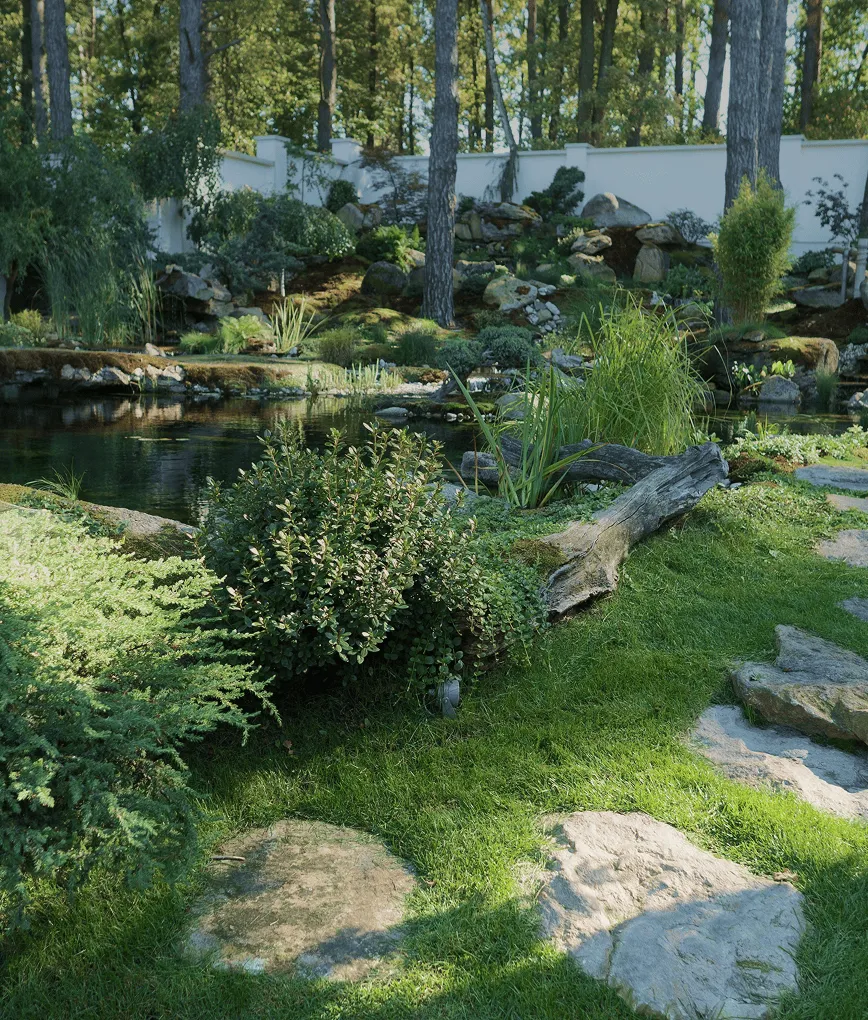
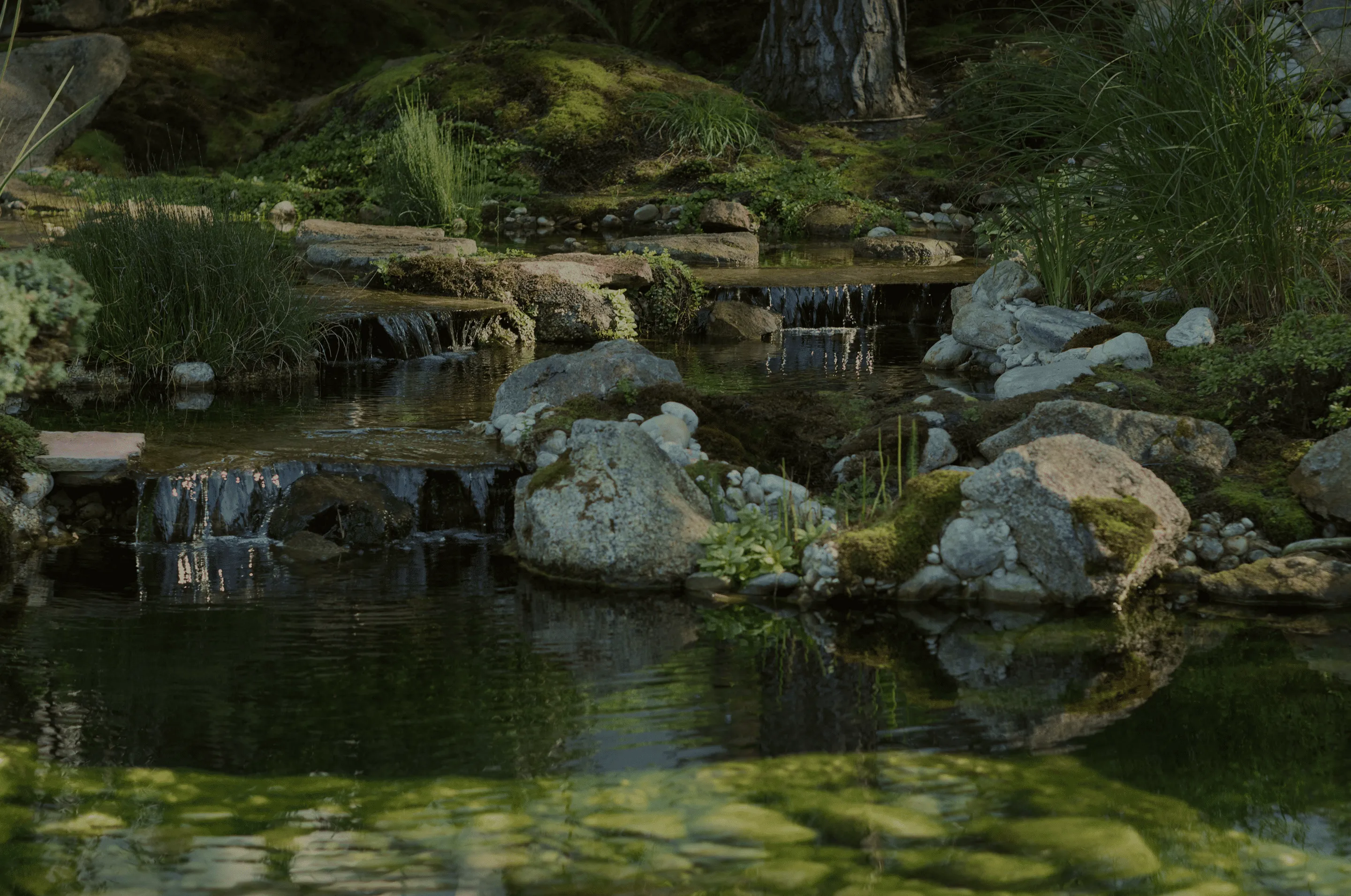
The pond has a sculpted basin with several depths, each treated differently. The shallow zones near the edge are finished with fine pebbles, creating visible layers when viewed from above. These areas also attract koi carp, which often swim close to the surface and warm themselves in the sun, adding movement and life to the scene.

Deeper sections of the pond are shaped like hidden grottoes using a combination of natural and artificial stone. This layered structure encourages exploration — not only through walking paths but also through visual observation of water depth, reflections, and fish movement.
One of the most powerful effects in this landscape is the reflection of trees and sculpted forms on the water surface. The mirror-like quality of the pond visually expands the space and adds another compositional layer, making the garden feel larger and more immersive.
This garden is built as a sequence of experiences rather than a single view
It cannot be fully perceived from one position. As you walk, turn your head, and move deeper into the space, the scenery continuously changes. The route allows multiple loops, inviting repeated walks and new discoveries over time.
From an aesthetic perspective, the garden is multi-layered and deeply composed. Functionally, it is fully walkable and inviting. Together, these qualities create a landscape that feels alive — a place designed not only to be seen, but to be experienced.
Projects
Projects
Projects


contact